






Stone 101
Stone Finishes Reference
How each finish, edge, coping treatment and joint looks, grips and wears, with drawings to show your mason.

Compare Finishes at a Glance
| Finish | Look | Grip when wet | Best for | Upkeep | Price |
|---|---|---|---|---|---|
| Thermaled (flamed) | Even, rough matte | High | Pool decks, steps, patios | Low | $$ |
| Natural cleft | Layered, uneven | High | Patios, walkways | Low | $ |
| Tumbled | Soft, worn edges | Good | Pavers, cobbles, garden paths | Low | $$ |
| Honed | Smooth, flat matte | Medium | Interiors, covered porches, counters | Seal | $$ |
| Rockface / split face | Bold, chipped | Not a walking surface | Walls, step risers, posts | Low | $$ |
| Bush-hammered | Fine texture, lighter tone | High | Steps, ramps, commercial | Low | $$ |
| Sawn | Flat, faint saw marks | Medium | Modern patios, treads (often thermaled after) | Low | $$ |
Grip when wet and price are general guides; they vary by stone.
Surface Finishes

Rockface
Rock Face (Rockface) stone is hand-chipped to produce a natural rugged look projection along its face. This finish creates a more raw appearance than regular split face. Detail character ranges from low to high for most stones. Choose this to keep a natural looking finish.

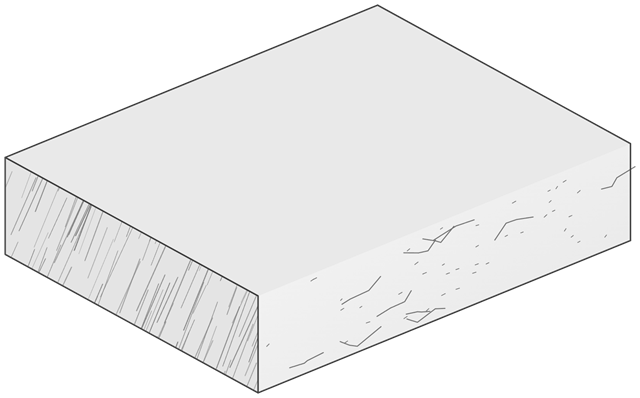
Split Face
Split face stone is split along its face, by machine or by hand, leaving a natural texture that is flatter and more even than rockface. Rockface is hand-chipped to project out from the face; split face stays closer to one plane.

More Finishes & Textures

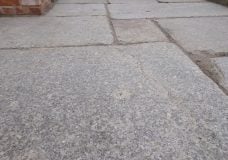
Tumbled
The process of rounding or softening the edges of a piece of stone and its face to provide a smoother, more rustic appearance. Commonly tumbled stone includes pavers, wall stone, and cobblestones.

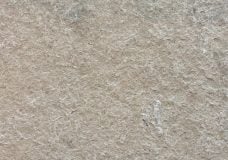
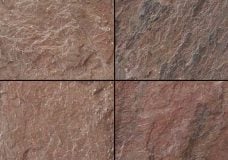
Natural Cleft
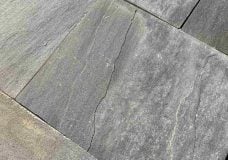
Generally pertains to stones that are formed in layers in the ground. When such stones are cleaved or separated along a natural bedding plane, the remaining surface is referred to as a natural cleft.

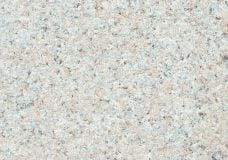
Thermaled
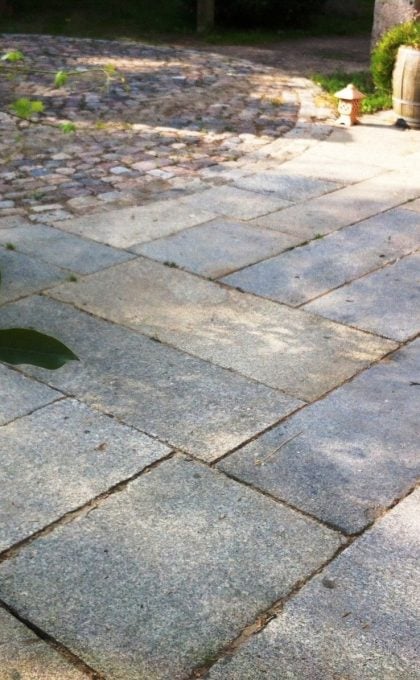
This finish is achieved by applying a high temperature flame to the surface of the stone. This flame fractures crystals on the face, leaving a rough-textured finish. Highly skid resistant, the thermaled finish is an excellent choice for walking surfaces.

Variegated
Defined by varying color pattern across the surface of a stone, most commonly referring to bluestone. Variegated bluestone displays lightly varying shades of blue, pink, lavender and brown.
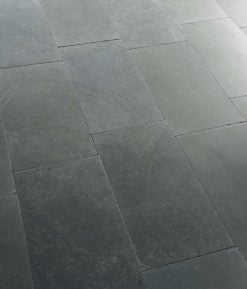
Honed
Ground smooth and flat, with a soft matte look and no shine. The color shows evenly; it is smoother underfoot than thermaled, so it suits covered and indoor areas best.

Bush-Hammered
Struck with a toothed hammer head for a pitted, textured surface with good grip; often chosen for bluestone pool decks.
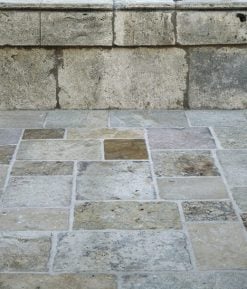
Brushed / Antiqued
Brushed with abrasive brushes to soften the face for a worn, timeworn look, with the stone’s natural texture still showing.
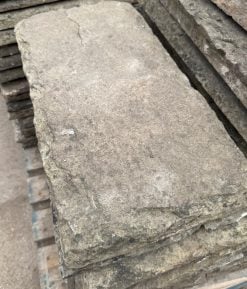
Sawn
Cut by a saw, leaving a flat face with faint saw marks; often thermaled or honed afterwards for the final finish.
Edge Profiles

Bullnose
Convex rounding on top and bottom such as a stair tread. A convex, semicircular molding formed on the end of a piece of stone, usually bluestone, travertine, or granite.


Eased Edge or Eased Edge Top
Eased Edge (EE) is the process of saw-cutting and slightly “easing” over the edges of the coping to smooth sharp corners. It can be either top and bottom or top only as options. Choose this stone finish for a slight smooth finish.
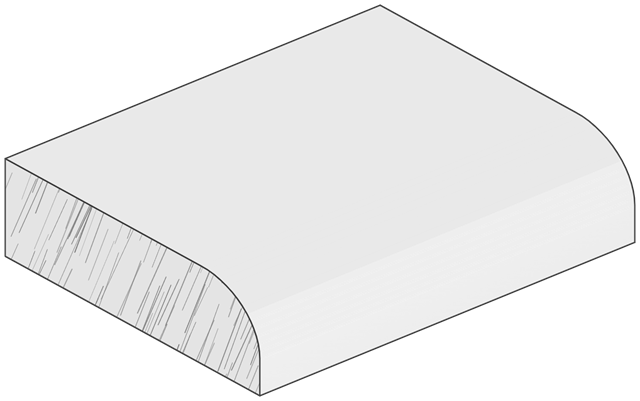
Half Bullnose
The top edge is rounded over and the bottom edge stays square: a softer edge than a sawn one, often used on treads, coping and wall caps.
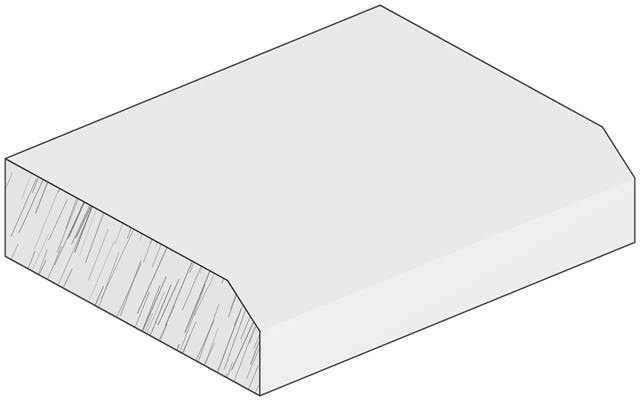
Chamfer / Bevel
The top edge is cut at an angle, usually 45 degrees, for a crisp, clean edge that chips less than a sharp corner.
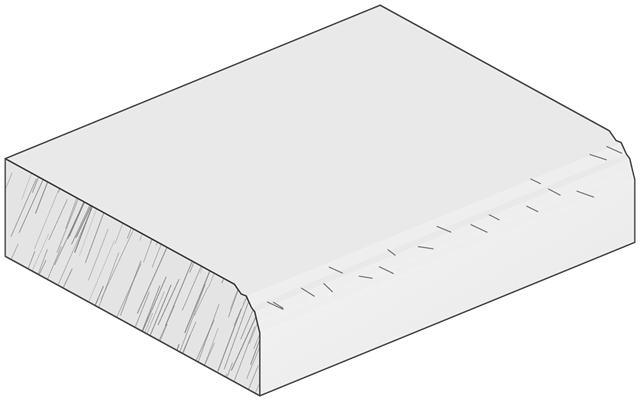
Rock-Pitched
The edge is chipped back by hand with a pitching tool for a rugged, natural edge on an otherwise flat piece.
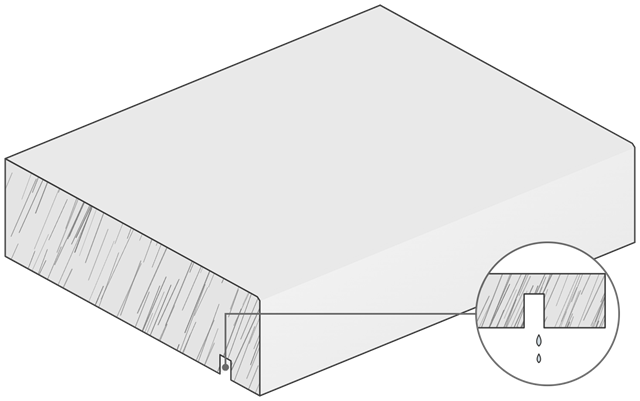
Drip Edge
A small groove cut along the underside near the front edge of a wall cap or sill, so rain drips off instead of running back down the wall.
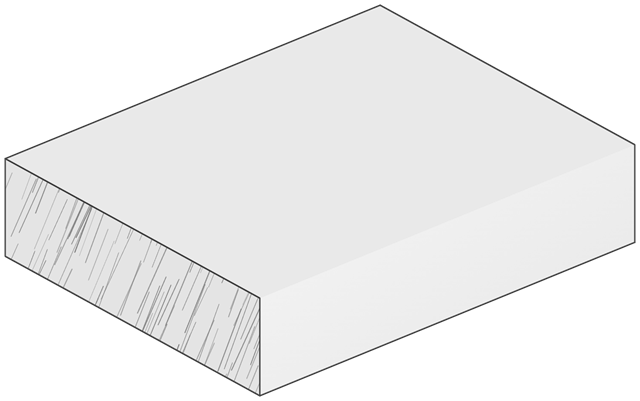
Square / Sawn Edge
A plain saw-cut edge with sharp, square corners: the simplest edge, for a clean, modern look.
Coping Finish Treatments

Finish Treatment (1 Long)
1 Long refers to coping where the long front-facing side of the coping receives the finishing treatment. This edge is typically the primary visible part of the coping, where the design, texture, and finish are most prominent.
The ‘1 long’ side is crucial in providing a clean, polished appearance, ensuring the coping fits seamlessly into the structure while enhancing its overall aesthetic.

Finish Treatment (2 Long)
2 Long refers to a coping piece with both of the long sides (front and back) receiving finishing treatment. In this case, both the front and back edges of the coping are treated, while the shorter sides on the left and right are untreated.
This type of coping is commonly used for projects where both long sides of the coping are exposed and require a complete, finished appearance.

Finish Treatment (1 Long, Left Short)
1 Long, Left Short refers to coping where the front-facing long side and shorter left side receive finishing treatment. The shorter side on the right and long side on the back remain unmodified or are cut to fit specific design requirements. This type is commonly used in corners or edges where one side is longer than the other.

Finish Treatment (1 Long, Right Short)
1 Long, Right Short is similar to 1 Long, Left Short coping, but the short right side and long, front-facing side of the coping receive finishing treatment. The short left side and long back side are left either unmodified or cut to fit the design.
This coping is often used in specific corner placements or uneven layouts where one edge is shorter.
Joint + Grout Styles
Same stone, different wall. How deep the mortar sits changes the shadows and the whole feel. Tell your mason which one you want.
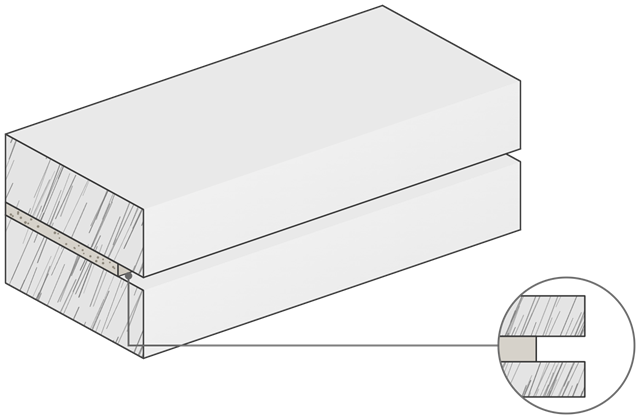
Set-Back (Raked) Joint
Mortar pressed back from the face. Crisp edges, deep shadow lines.
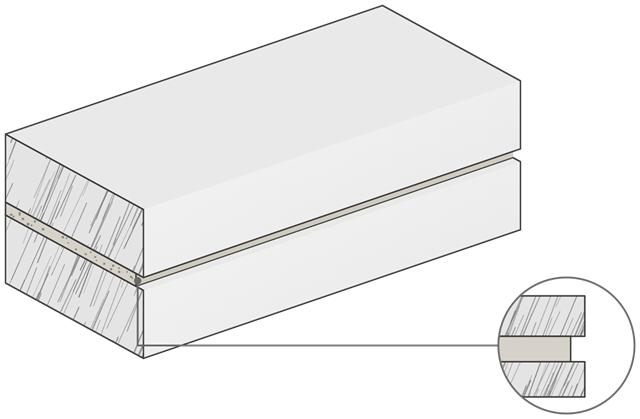
Standard Joint
Mortar just behind the face. Balanced, classic stone look.
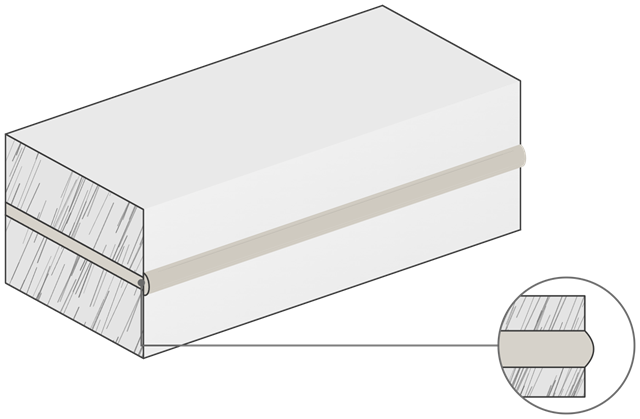
Overgrout (Mortar Wash)
Mortar brought out over the edges. Softer, blended, rustic.
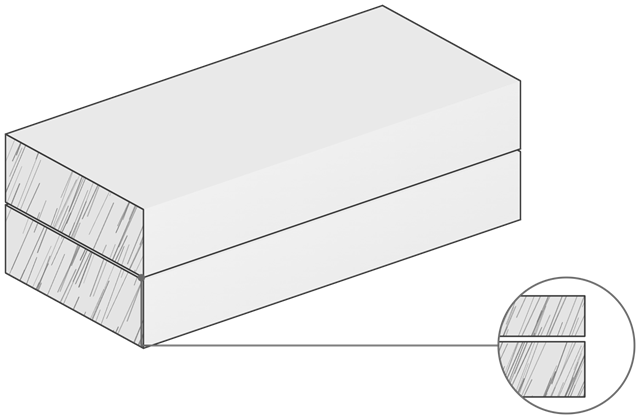
Dry-Stack (Tight Fit)
Stones fitted tight, no mortar showing. The most natural wall.
Granite Post - Stone Finishes

Rocked
Rocked stone finish embraces a bold, textured look, with all sides intentionally roughened to enhance the stone’s natural character. The process creates a rugged, chiseled surface that highlights deep ridges and shadowed contours, giving the stone a strong, organic presence.
Its raw, weathered aesthetic feels both timeless and striking, as if the stone was shaped by nature itself—only with a bit more precision.


Rock 2 Thermal 2 (R2T2)
Rock 2 Thermal 2 (R2T2) stone finish creates a striking contrast between its surfaces, with two sides left naturally rugged and split, while the other two are thermally treated for a smoother, matte texture. The result is a dynamic interplay of rough and refined - where the raw, organic edges highlight the stone’s natural character, and the thermal faces offer a softened, even-toned surface.


Pineapple
Pineapple granite finish isn’t as tropical as it sounds - no fruity cocktails included, unfortunately - but it does bring a textured, rugged elegance to any surface. Pineapple granite posts have a subtly bumpy, dimpled feel, reminiscent of a pineapple’s skin. It’s the perfect choice for anyone who wants their stone to look refined yet a little rough around the edges.

Which Finish For…
Pool coping
Thermaled top, bullnose or eased edge, 1 Long.
Patio
Cold winters
Dense stone, textured finish.
Questions We Hear
Yes. Flamed and thermaled are two names for the same finish: a high-temperature flame textures the face for a skid-resistant surface.
See It in Your Hand
Order a finish sample before you choose.