








Do the math
Calculate Your Materials
Measure your space, pick how it's laid, and get the boxes, pallets or bags with the right allowance for cuts. Then send the numbers to us for a firm quote.

- Measure your space: lengths, widths, heights.
- Pick the product or the pattern.
- Send it to us for a firm quote.
Pick a calculator
Pavers + patterns Stone veneer Flooring Pebbles, gravel + sand Wallstone Stone weight Converters
Paver Calculator
Add each area, pick a pattern, and we work out the pieces of each size.
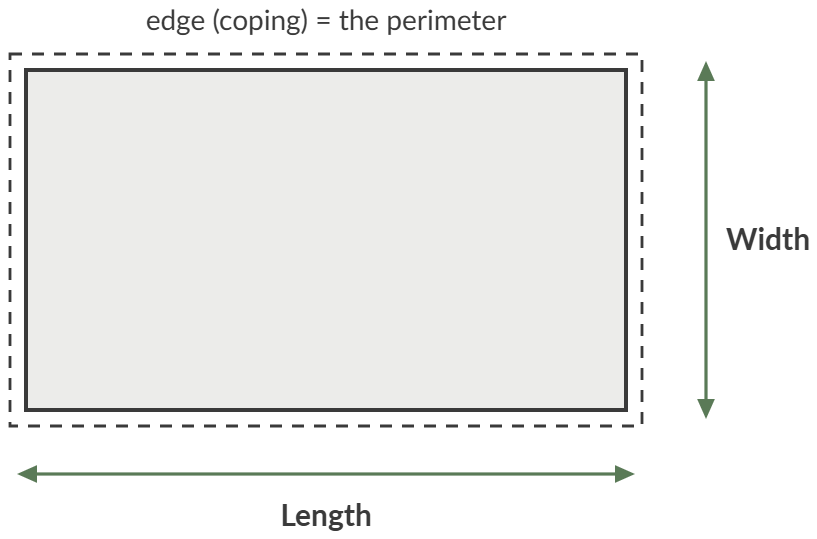
Tip: measure the edge you’ll finish with coping or a border, too; we count those pieces.
Your estimate
Enter your sizes to see the estimate.
Estimate; your rep confirms before ordering.
How to measure
Measure the length and the width of each rectangle and add them as areas. Split an odd shape into rectangles, or use the L-shape or the circle. The edge around it (the perimeter) is what coping or a border covers.
How much extra, and why
For paver orders, we typically recommend accounting for about 5-10% extra for cutting, accidental breakage, etc. A straight lay with few cuts needs about 5%, a pattern or running bond 10%, and curves, angles and many cuts 15%. Each pattern starts with its own allowance; you can change it.
A worked example
A 20 x 15 ft patio (300 sq ft) in Everblue Pattern B, with 10% for cuts: 330 sq ft = 33 sets of the pattern: 33 pavers of 24″ × 24″, 66 of 12″ × 24″ and 66 of 12″ × 12″. Coping in 12″ × 24″ pieces along its 70 ft edge: 39 pieces.
Paver questions
For paver orders, we typically recommend accounting for about 5-10% extra for cutting, accidental breakage, etc. Patterns with curves, angles and many cuts need up to 15%.
Split it into rectangles and add each one, use the L-shape (the overall size minus the cut-out) or the circle, or type the total square feet.
A pattern is laid as a repeating set of sizes. Whole sets keep the mix of sizes true on site, so you don’t run short of one size.
Stone Veneer Calculator
Add each wall, take out windows and doors, and list your outside corners.
Tip: corner pieces cover part of the wall, so we take that off the flats you need.
Your estimate
Enter your sizes to see the estimate.
Estimate; your rep confirms before ordering.
How to measure
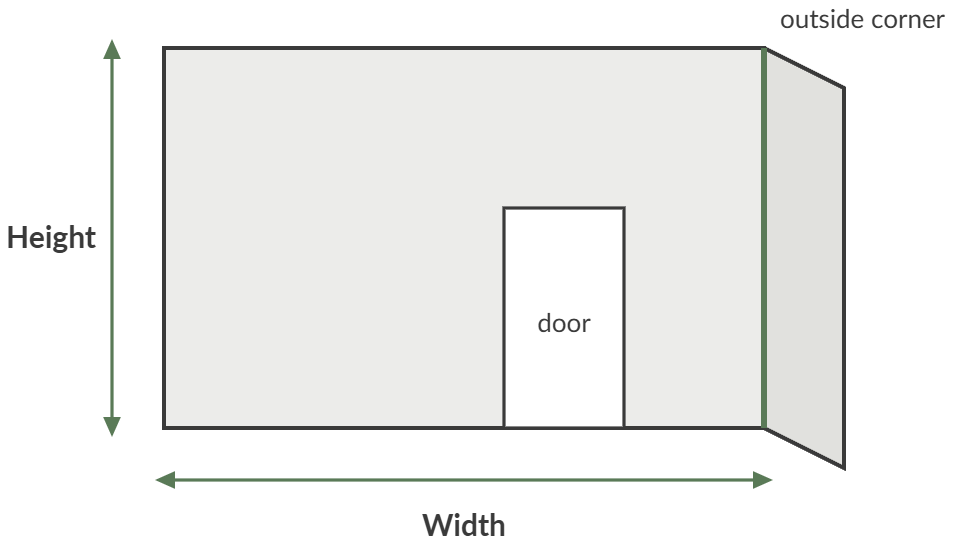
Measure each wall’s width and height. Measure each window and door, and the height of each outside corner.
How much extra, and why
We start with 10% for cuts; corners cover about 0.75 sq ft of wall per linear foot, which comes off the flats.
A worked example
A 24 x 9 ft wall with one 3 x 7 ft door and two 9 ft outside corners, 10% for cuts: 216 sq ft of wall, minus 21 for the door and 13.5 for the corners, = 200 sq ft of flats (4 pallets of 54 sq ft) and 20 lin ft of corners (3 boxes of 8 lin ft).
Stone veneer questions
Yes. Each linear foot of outside corner covers about 0.75 sq ft of wall, so the calculator takes that off the flats.
Yes: add each opening, and the calculator takes it off the wall area.
Yes. Your rep adds the mortar, lath and sealer to your quote.
The calculator adds 10% for cuts as a start; your rep confirms it for your walls.
Flooring Calculator
Add each room, or type your total square feet, and pick how the floor is laid.
Tip: measure each room wall to wall, closets included.
Your estimate
Enter your sizes to see the estimate.
Estimate; your rep confirms before ordering.
How to measure
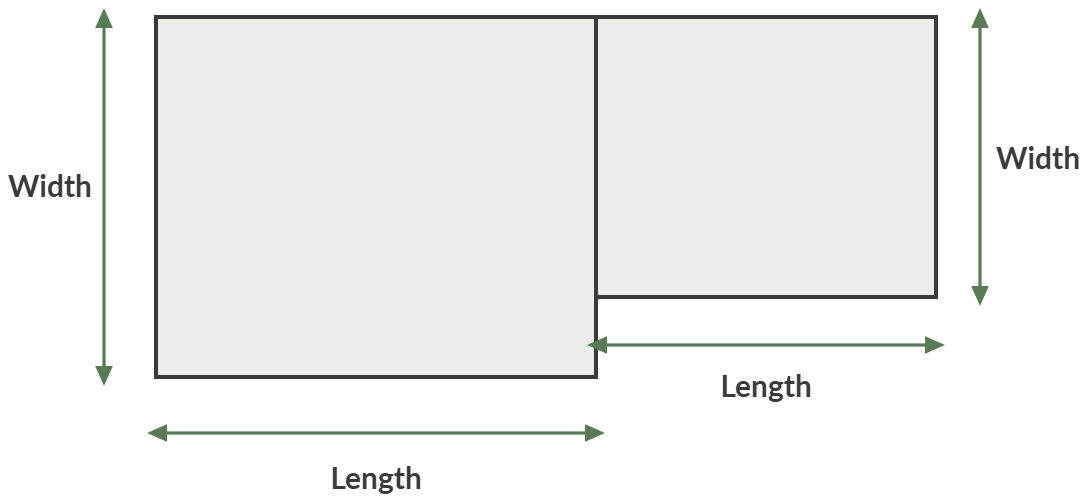
Measure each room’s length and width and add them one by one; the calculator adds them up.
How much extra, and why
For wood flooring orders, we typically recommend 7-10% waste to add to your overall square footage. A diagonal floor needs about 12%, herringbone or chevron 15%.
A worked example
A 16 x 14 ft room and a 12 x 12 ft room (368 sq ft), laid straight with 10%: 405 sq ft = 18 boxes of 22.5 sq ft (405 sq ft).
Flooring questions
For wood flooring orders, we typically recommend 7-10% waste to add to your overall square footage. Diagonal floors need about 12%, herringbone or chevron 15%.
Yes: measure them as rooms and add them.
Another note: If you love a floor but may not have the budget, try a different grade for those other rooms! Example – use that wood flooring you love in the 1st floor and another style for the bedrooms upstairs.
Tick “Add underlayment” and the calculator counts the 100 sq ft rolls; your rep confirms which one your floor needs.
Pebble, Gravel + Sand Calculator
Measure the area, choose how deep, and we count the bags. Beach pebbles: one 40 lb bag covers about 2 sq ft at 2 inches deep.
Tip: 2 inches deep covers most beds; go deeper where people walk.
Beach Pebbles | White · 40 lb bags · 0.33 cu ft each
Your estimate
Enter your sizes to see the estimate.
Estimate; your rep confirms before ordering.
How to measure
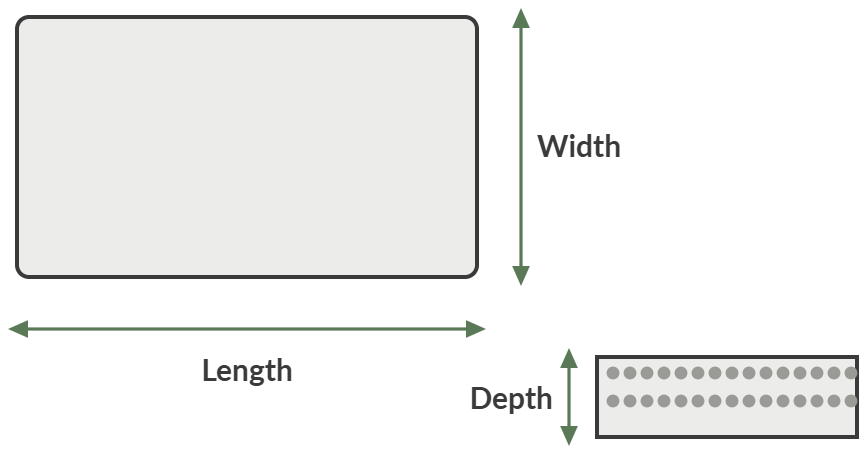
Measure the bed’s length and width (or the diameter of a round one) and decide how deep the stones go.
How much extra, and why
Pebbles, gravel and sand settle, so the calculator adds 5% as a start.
A worked example
A 10 x 4 ft bed of white beach pebbles, 2 inches deep, with 5% for settling: 40 sq ft = 7 cu ft = 22 bags of 40 lb.
Pebble, gravel + sand questions
One 40 lb bag covers about 2 sq ft at 2 inches deep.
Pebbles, gravel and sand settle once they’re spread and walked on, so the calculator adds 5% as a start.
Wallstone Calculator
Measure each wall’s length and height, pick thick or thin stones, and we count the pallets, with a cap along the top if you want one.
Tip: our wallstone covers about 25-50 sq ft of wall face per pallet: thick stones less, thin stones more.
Your estimate
Enter your sizes to see the estimate.
Estimate; your rep confirms before ordering.
How to measure
Measure each wall’s length and its height above the ground; for a retaining wall, add the part below ground your installer buries.
A worked example
A 40 ft garden wall, 3 ft high, in thick wall stone, with 10% for cuts and fit: 120 sq ft of face = 132 sq ft = about 6 pallets (3 in thin stones), 40 lin ft of cap.
Wallstone questions
About 25 to 50 sq ft of wall face, depending on the stones: thick stones cover less, thin stones more.
Thick wall stone (4 to 12 inches deep) builds freestanding and retaining walls; thin, veneer-style stone (1 to 3 inches) faces a wall that’s already built.
Your rep confirms the tonnage for the stone you pick.
Stone Weight Calculator
Pick the stone, its thickness and how much, and we work out the pounds and tons, so you can plan the delivery and the handling.
Tip: weight sets the truck: a lift-gate, a forklift or a boom.
Your estimate
Enter your sizes to see the estimate.
Estimate; your rep confirms before ordering.
Stone weight questions
From the quarry’s or supplier’s numbers for each stone; where we don’t have one yet, your rep confirms the weight.
It sets how the stone is delivered and handled on site: the truck, a lift-gate, a forklift or a boom.
Converters
Quick conversions for flooring, wall boards and lumber.
Note: Some of our wood products are in SF and others are in LF. Please pay attention to the suffix for all wood products including wood flooring.
Square feet to linear feet
We suggest 5–10%.
Your estimate
Enter your numbers to see the result.
Estimate; your rep confirms before ordering.
Linear feet to square feet
We suggest 5–10%.
Your estimate
Enter your numbers to see the result.
Estimate; your rep confirms before ordering.
Board feet
Your estimate
Enter your numbers to see the result.
Estimate; your rep confirms before ordering.
Volume (wall stone, gravel)
Your estimate
Enter your numbers to see the result.
Estimate; your rep confirms before ordering.
How Much Extra Should I Order?
Every calculator adds its own allowance for cuts, breakage or settling; here they are side by side. You can change it in each calculator.
| Job | Add | Why |
|---|---|---|
| Pavers, straight lay, few cuts | 5% | Cuts at the edges, a few breaks |
| Pavers in a pattern or running bond | 10% | More cuts where the pattern meets the edge |
| Pavers with curves, angles, many cuts | 15% | Many cut pieces |
| Wood flooring, laid straight | 10% | End cuts at the walls |
| Wood flooring, diagonal | 12% | Angled cuts along every wall |
| Wood flooring, herringbone or chevron | 15% | Every piece is cut to the pattern |
| Stone veneer | 10% | Cuts around openings and at the edges |
| Wallstone | 10% | Fitting the stones |
| Pebbles, gravel + sand | 5% | Settling |
For paver orders, we typically recommend accounting for about 5-10% extra for cutting, accidental breakage, etc. For wood flooring orders, we typically recommend 7-10% waste to add to your overall square footage.
Every result is an estimate; your rep confirms the numbers before you order. More help: installing pavers, installing wood floors, stone calculators, flooring calculators and lumber calculators.
For more questions, get in touch [email protected] or 1-855-STN-WOOD (786-9663). Related: Stone Finishes Guide · Glossary · Catalogs + Downloads